As winter tightens its grip on central Indiana, extended periods of extreme cold can create more than just uncomfortable conditions—they can introduce serious risks inside the home. When temperatures hover near or below freezing for days at a time, homes become vulnerable to frozen pipes, heating-related fires, carbon monoxide exposure, and electrical hazards. These winter emergencies often happen quietly and quickly, but many can be prevented with preparation, awareness, and safe decision-making.
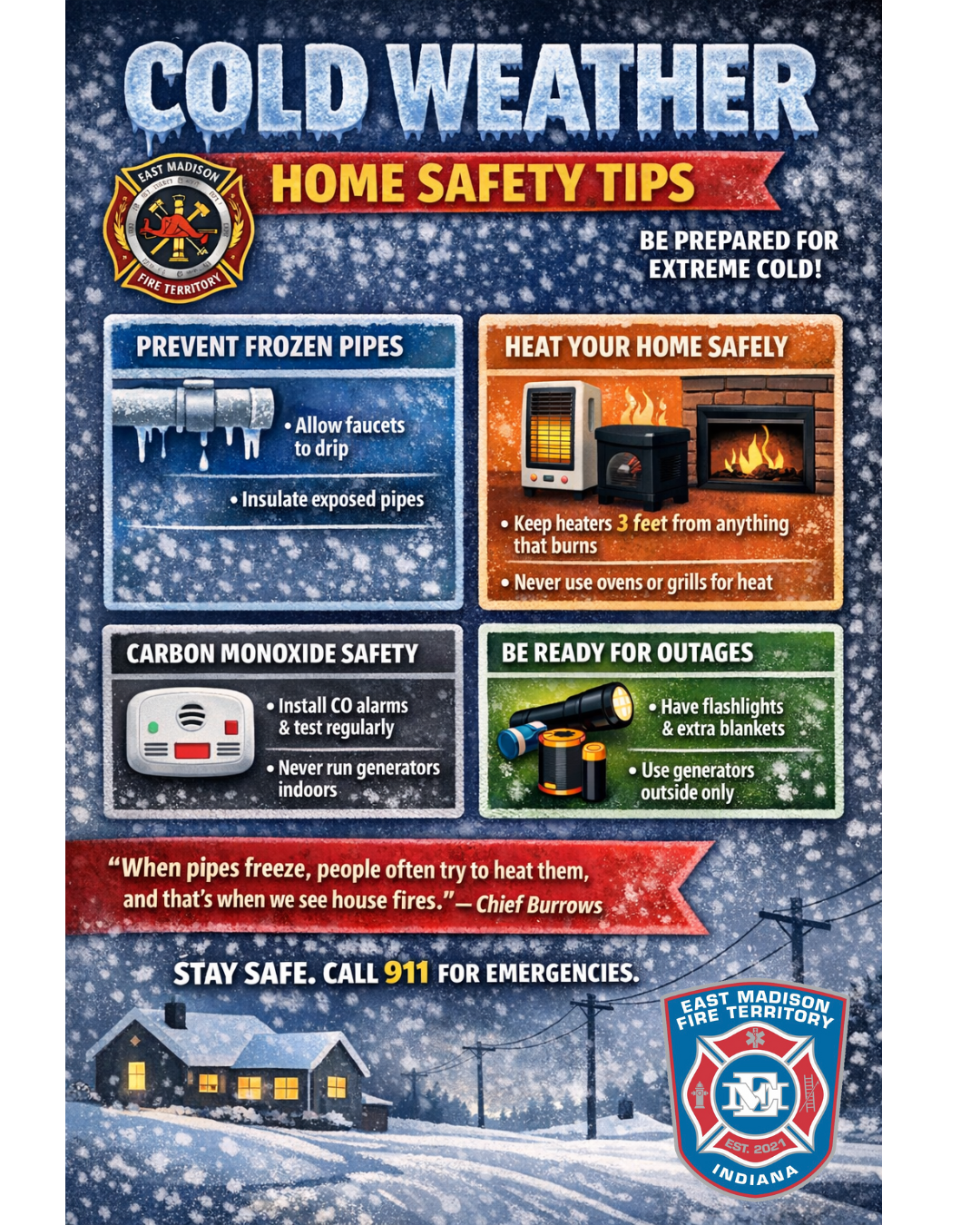
One of the most common cold-weather problems homeowners and renters face is frozen plumbing. Water pipes located in exterior walls, basements, crawl spaces, or garages are especially at risk. When water freezes, it expands, which can cause pipes to crack or burst, leading to significant water damage once temperatures rise. East Madison Fire Territory Chief Burrows emphasizes that frozen pipes are more than just an inconvenience. “These cold temperatures can really be an issue for homeowners and renters,” Burrows said. “Unfortunately, when pipes freeze, we have individuals who try to heat their pipes and cause house fires.” Attempting to thaw pipes with open flames, torches, or space heaters is extremely dangerous and has led to serious structure fires during cold snaps.
Cold Weather Pipe Safety Tips
- Allow faucets to drip slightly during extreme cold to keep water moving.
- Open cabinet doors under sinks to allow warm air to circulate around pipes.
- Insulate exposed pipes in basements, crawl spaces, and garages.
- Never use open flames, torches, or space heaters to thaw frozen pipes.
- Disconnect outdoor hoses and shut off exterior water supplies when possible.
Heating systems also work overtime during prolonged cold weather, and with that increased use comes an increased risk of fire. Space heaters, fireplaces, and wood stoves are frequently involved in winter house fires. Space heaters should always be placed at least three feet away from anything that can burn, including furniture, curtains, and bedding. They should be plugged directly into wall outlets and turned off when leaving the room or going to sleep. Fireplaces and wood stoves should be properly maintained, with chimneys inspected and cleaned regularly. Using a fireplace screen can help prevent sparks from escaping and igniting nearby materials.
Home Heating Safety Reminders
- Keep space heaters at least three feet from combustible materials.
- Plug heaters directly into wall outlets—never into extension cords or power strips.
- Turn off portable heaters when sleeping or leaving the room.
- Never use ovens, stovetops, grills, or camp stoves for heat.
Carbon monoxide remains one of the most dangerous hidden hazards during the winter months. This colorless, odorless gas can build up quickly indoors when fuel-burning appliances are used improperly or ventilation is blocked. Carbon monoxide detectors should be installed on every level of the home and near sleeping areas, and they should be tested regularly. Vehicles, generators, and fuel-powered equipment should never be operated inside homes or garages, even if garage doors are open. If a carbon monoxide alarm activates, everyone should exit the home immediately and call 911 from a safe location.
Carbon Monoxide Safety Essentials
- Install CO detectors on every level of your home and near bedrooms.
- Test detectors monthly and replace batteries as needed.
- Never run vehicles or generators in garages or indoors.
- Leave the home immediately if a CO alarm sounds and call 911.
Electrical systems also experience increased demand during extreme cold as residents rely on heaters, electric blankets, and additional lighting. Overloaded outlets, damaged cords, and improper use of extension cords can quickly lead to electrical fires. Extension cords should be used sparingly and never run under rugs or furniture, where heat can build up unnoticed. Power strips should not be overloaded, especially with high-wattage appliances such as space heaters.
Winter storms can also cause power outages, sometimes lasting for extended periods. Preparing ahead of time can make these situations safer and less stressful. Flashlights, extra batteries, warm blankets, and layered clothing should be readily available. If a generator is used, it must be operated outdoors and well away from doors, windows, and vents to prevent carbon monoxide from entering the home. Candles should be used with extreme caution and kept far from anything that could catch fire.
Extreme cold can be especially dangerous for older adults, young children, and individuals with medical conditions. Checking on neighbors, friends, and family members during cold weather can help identify heating issues or other concerns before they turn into emergencies.
East Madison Fire Territory encourages residents to take these simple but important steps to protect their homes and loved ones throughout the winter season. Cold weather preparedness is a shared responsibility, and proactive planning can prevent emergencies, reduce property damage, and save lives. If you experience a fire, a carbon monoxide alarm activation, downed power lines, or a medical emergency related to cold exposure, call 911 immediately. While firefighters are always ready to respond, prevention remains the most effective way to keep our community safe during the coldest months of the year.