East Madison Fire Territory | Winter Safety Awareness 2026–2027
As winter approaches Central Indiana, East Madison Fire Territory (EMFT) is reminding residents that preparing for cold weather involves more than simply turning up the thermostat.
Freezing temperatures, winter storms, and extended periods of extreme cold can create serious hazards inside and around our homes. Frozen water pipes, heating equipment fires, carbon monoxide exposure, and electrical emergencies are among the most common winter-related concerns for firefighters.
The good news is that many of these emergencies are preventable.
East Madison Fire Territory encourages homeowners, renters, and businesses throughout Chesterfield, Union Township, and Richland Township to take a few simple precautions before temperatures begin to fall.
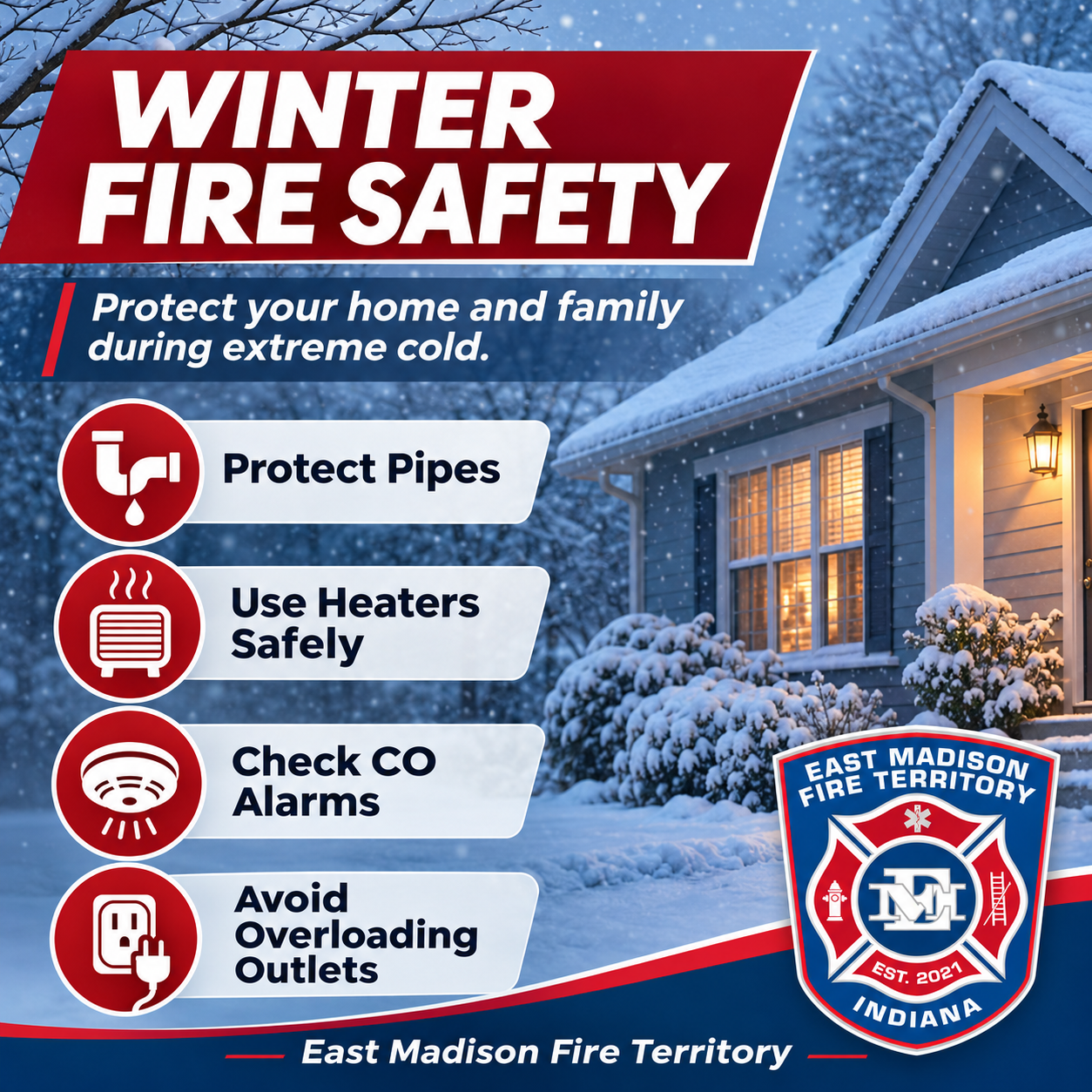
Frozen Pipes: A Hidden Winter Danger
One of the most common problems during prolonged freezing temperatures is frozen plumbing. Pipes located along exterior walls, in crawl spaces, basements, garages, and other unheated areas are especially vulnerable.
When water freezes inside a pipe, it expands and can cause the pipe to crack or burst. The resulting water damage can be extensive, particularly when the frozen pipe begins to thaw.
But the danger doesn’t end with water damage.
East Madison Fire Territory Fire Chief Jamey Burrows reminds residents that attempting to thaw frozen pipes improperly can turn a plumbing problem into a structure fire.
“These cold temperatures can really be an issue for homeowners and renters,” Chief Burrows said. “Unfortunately, when pipes freeze, we have individuals who try to heat their pipes and cause house fires.”
Using a propane torch, open flame, or portable space heater to thaw frozen plumbing can ignite nearby combustible materials, including insulation, wood framing, and other hidden building components.
Protect your pipes with these simple steps:
- Disconnect outdoor garden hoses and shut off exterior water supplies when possible.
- Insulate exposed plumbing in crawl spaces, garages, and unheated areas.
- Open cabinet doors beneath sinks located along exterior walls to allow warmer air to circulate.
- During extreme cold, consider allowing a small trickle of water to flow from faucets serving vulnerable pipes, particularly when recommended by your water utility.
- Maintain adequate heat throughout your home, even when you’re away.
- Know where your main water shutoff valve is located in case a pipe bursts.
- Never use an open flame, torch, or space heater to thaw frozen plumbing.
If you discover a frozen pipe, use a safe thawing method or contact a qualified plumber. If a pipe has burst, shut off the water supply and seek professional assistance.
Home Heating Safety: Keep the Warmth, Prevent the Fire
When outdoor temperatures drop, heating equipment works harder to keep our homes comfortable. Unfortunately, improper use of portable heaters, fireplaces, wood stoves, and other heating appliances can significantly increase the risk of a house fire.
Space heaters deserve particular attention. These devices can provide supplemental warmth, but they must be used correctly.
Important home heating safety reminders:
- Keep portable space heaters at least three feet away from anything that can burn, including curtains, furniture, bedding, and clothing.
- Plug space heaters directly into wall outlets. Never use extension cords or power strips.
- Turn portable heaters off when leaving a room or going to bed.
- Have furnaces, fireplaces, chimneys, and other heating equipment inspected and maintained regularly.
- Use a protective screen in front of wood-burning fireplaces to prevent sparks and embers from escaping.
- Never use an oven, stovetop, charcoal grill, or outdoor cooking equipment to heat your home.
Remember, a small heating appliance can produce enough heat to ignite nearby materials in a matter of minutes.
Carbon Monoxide: The Invisible Winter Threat
Carbon monoxide (CO) is often called the silent killer because it is a colorless, odorless gas that can become deadly without warning.
During winter, the risk of carbon monoxide exposure increases when fuel-burning heating equipment malfunctions, ventilation systems become blocked, or generators and vehicles are operated in unsafe locations.
Symptoms of carbon monoxide poisoning may include headaches, dizziness, nausea, weakness, confusion, and loss of consciousness.
Because these symptoms can resemble other illnesses, having properly functioning carbon monoxide alarms is essential.
Protect your family from carbon monoxide:
- Install carbon monoxide alarms on every level of your home and outside sleeping areas.
- Test alarms monthly and replace them according to the manufacturer’s instructions.
- Have fuel-burning furnaces and heating appliances inspected regularly.
- Never operate a vehicle inside an attached garage, even with the garage door open.
- Never use gasoline-powered generators, grills, or other fuel-burning equipment indoors.
- Keep outdoor furnace and appliance exhaust vents clear of snow, ice, and debris.
If your carbon monoxide alarm sounds, immediately move everyone outside to fresh air and call 911 from a safe location. Do not reenter the building until emergency personnel have determined it is safe.
Electrical Safety: Avoid Overloading Your Home
Winter weather often brings increased electrical demand as families use portable heaters, electric blankets, additional lighting, and other appliances.
Overloaded circuits, damaged electrical cords, and improper use of extension cords can quickly create dangerous conditions.
East Madison Fire Territory reminds residents that electrical safety should never be overlooked.
Reduce electrical fire hazards by following these precautions:
- Avoid plugging multiple high-wattage appliances into the same outlet or circuit.
- Never connect portable space heaters to extension cords or power strips.
- Inspect electrical cords for damage, exposed wiring, or overheating.
- Never run extension cords beneath rugs, carpets, or furniture.
- Avoid connecting multiple power strips or extension cords together.
- Stop using any outlet or appliance that produces sparks, unusual odors, or excessive heat.
If you notice frequently tripping circuit breakers, flickering lights, or outlets that feel unusually warm, contact a qualified electrician.
Winter Power Outages: Be Prepared Before the Lights Go Out
Snow, ice, strong winds, and severe winter weather can damage power lines and interrupt electrical service, sometimes for extended periods.
Preparing before a storm arrives can make a significant difference in your family’s safety and comfort.
Every household should maintain basic emergency supplies, including flashlights, extra batteries, blankets, warm clothing, drinking water, necessary medications, and a way to receive weather and emergency information.
If you rely on electrically powered medical equipment, develop a backup plan before severe weather occurs.
Generator safety is especially important.
Portable generators must always be operated outdoors, at least 20 feet away from windows, doors, and vents, with exhaust directed away from the building.
Never operate a generator inside a garage, basement, enclosed porch, or other partially enclosed area.
Use battery-powered flashlights instead of candles whenever possible to reduce the risk of fire.
If your home loses heat during extreme cold, consider relocating to a safe, heated location rather than attempting to heat your home with unsafe appliances.
Check on Your Neighbors: A Simple Act That Can Save a Life
Extreme cold can be especially dangerous for older adults, young children, and individuals with medical conditions or limited mobility.
A quick telephone call, text message, or visit to a neighbor can make a meaningful difference.
Check to make sure they have adequate heat, necessary medications, food, and a safe way to request assistance if needed.
Also remember your pets. Bring them indoors during dangerous cold weather and make sure they have access to adequate shelter and fresh water.
Looking out for one another is an important part of keeping our community safe.
Smoke Alarms and Home Escape Planning
Winter is also an excellent time to review your family’s fire safety plan.
East Madison Fire Territory encourages every household to have working smoke alarms on every level of the home, inside each bedroom, and outside sleeping areas.
Test smoke alarms monthly and replace units when they reach 10 years of age, or sooner if directed by the manufacturer.
Make sure everyone in your home knows two ways out of each room, when possible, and establish a designated outdoor meeting location.
If a fire occurs, get outside, stay outside, and call 911.
Prevention Starts at Home
The firefighters and emergency medical personnel of East Madison Fire Territory remain ready to respond to emergencies throughout the winter season. However, our greatest opportunity to protect lives and property begins long before an emergency occurs.
Taking time now to inspect heating equipment, protect plumbing, check smoke and carbon monoxide alarms, and prepare emergency supplies can help prevent a dangerous situation later.
“Winter weather brings challenges every year, but preparation and good safety decisions can make a tremendous difference,” said East Madison Fire Territory officials.
East Madison Fire Territory encourages everyone to make winter safety a family priority.
If you experience a fire, carbon monoxide alarm activation, downed power lines, or a medical emergency related to cold exposure, call 911 immediately.
Stay warm. Stay prepared. Stay safe.
East Madison Fire Territory
Protecting lives, property, and the communities we proudly serve.
#EastMadisonFire #WinterSafety #FirePrevention #CommunitySafety